
The Leather iPhone Case, Reconsidered
What happened to the leather iPhone case after the largest phone company in the world walked away from it, and what the object could be if someone slowed down.
There is a quiet absurdity in modern life that almost no one remarks on. We will spend an hour choosing a coat, a season deliberating over a watch, a lifetime loyal to a single house of shoes. And then we wrap the object we touch more than any other, the one we hold for hours a day, set on every café table, pull from every pocket, in whatever was nearest the till. The phone is the most handled possession most people own. It is also, more often than not, the most carelessly dressed.
For a brief and civilised period, the phone wore leather without anyone having to think about it. Then, in the autumn of 2023, the company that had made leather the default simply stopped.
The autumn leather left the phone
When Apple discontinued its leather cases in 2023, it did not so much retire a product as vacate a category. In their place came FineWoven, a microtwill spun largely from recycled material, introduced with the language of progress. The reception was swift and unkind. The fabric scratched, stained, and frayed within weeks; owners posted photographs of cases that looked exhausted after a month. By September 2024 Apple had withdrawn FineWoven entirely, with no leather equivalent to follow. For its newest phones the choice narrowed to silicone or clear plastic.
Read it twice, because it is genuinely strange. The most design-literate company on earth looked at the single object its customers hold most, and decided the answer was a rubber sleeve. A door was left open. Several houses walked through it.
Who makes the leather iPhone case
The field that rushed to fill the gap is, to its credit, a good one. From the Netherlands, Mujjo built a following on slim, vegetable-tanned full-grain cases with metal buttons and a restrained debossed mark, usually around fifty-nine dollars. From the United States, Nomad pressed Horween leather into rugged cases engineered to patina over a season of hard use. Bellroy brought the discipline of a wallet maker to the back of the phone. Woolnut wraps Scandinavian full-grain over slim sidewalls. Maison de Sabre took the colour-forward, monogrammed route, pitched higher, at a hundred dollars and up.
It is a healthy market, and it solved the obvious problem: real leather returned to the phone. But look closely and the category still thinks of the case as an accessory rather than as a leather good. The recurring complaints in any honest reading of the reviews are always the same three: thin hides chosen for cost, printed or bonded finishes that lift and flake at the corners where fingers land, and a sameness of veg-tan brown that treats the phone as a thing to cover rather than a thing to dress.
What almost no one is doing is the slow part.
What a leather case actually is
Strip away the marketing and a leather iPhone case is two objects pretending to be one. There is the structure, a hard inner shell that does the real work of protection, the raised edge that keeps glass off the table, the magnet array that holds a MagSafe wallet or a charger. And there is the skin, the leather that you actually feel, that ages, that you choose to live with or replace.
Most of the conversation fixates on the first object and treats the second as decoration. That is the inversion worth correcting. The engineering is table stakes; everyone has the shell. The leather is the part that becomes yours, and it is the part the category keeps cheaping out on.
A case worth keeping has to earn its place on both counts. It must protect like a tool and age like a wallet. That second standard is the one almost no phone case is built to meet, because meeting it is expensive, and it cannot be rushed.
The case for the hand
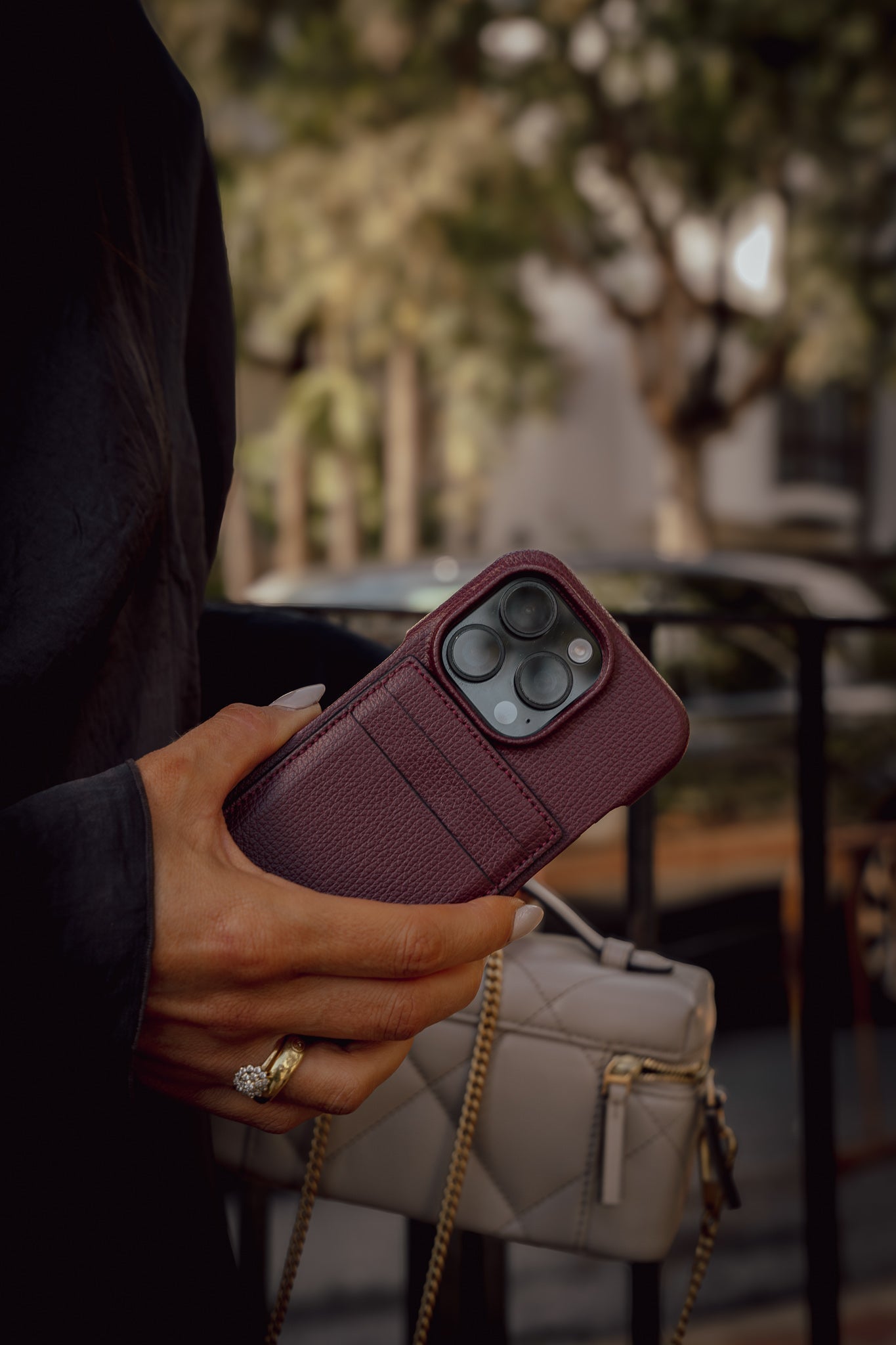
This is where Maison Molier started from a different question. Not "how do we cover a phone" but "what would the object be if we made it the way a house makes a wallet it expects you to carry for years."
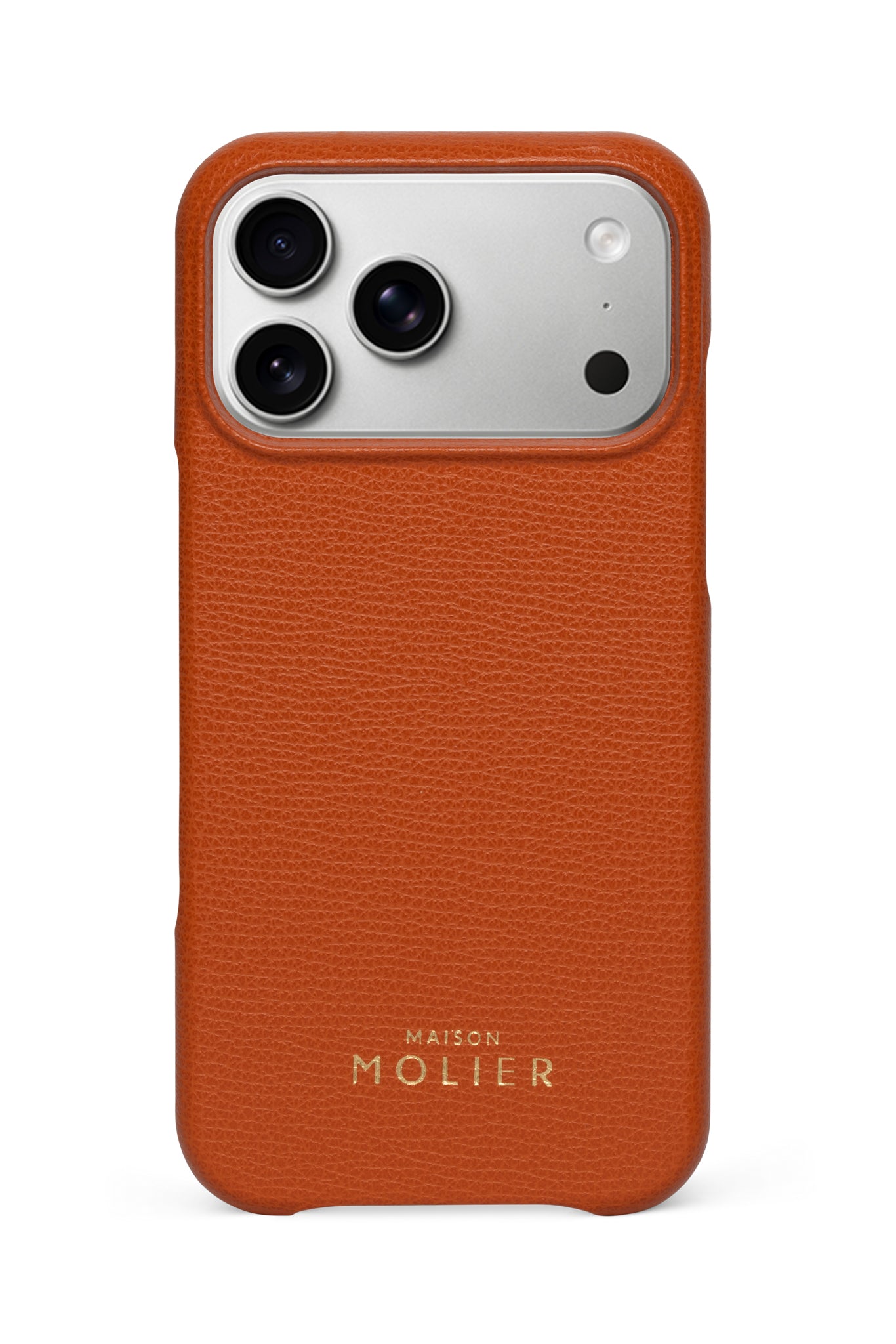
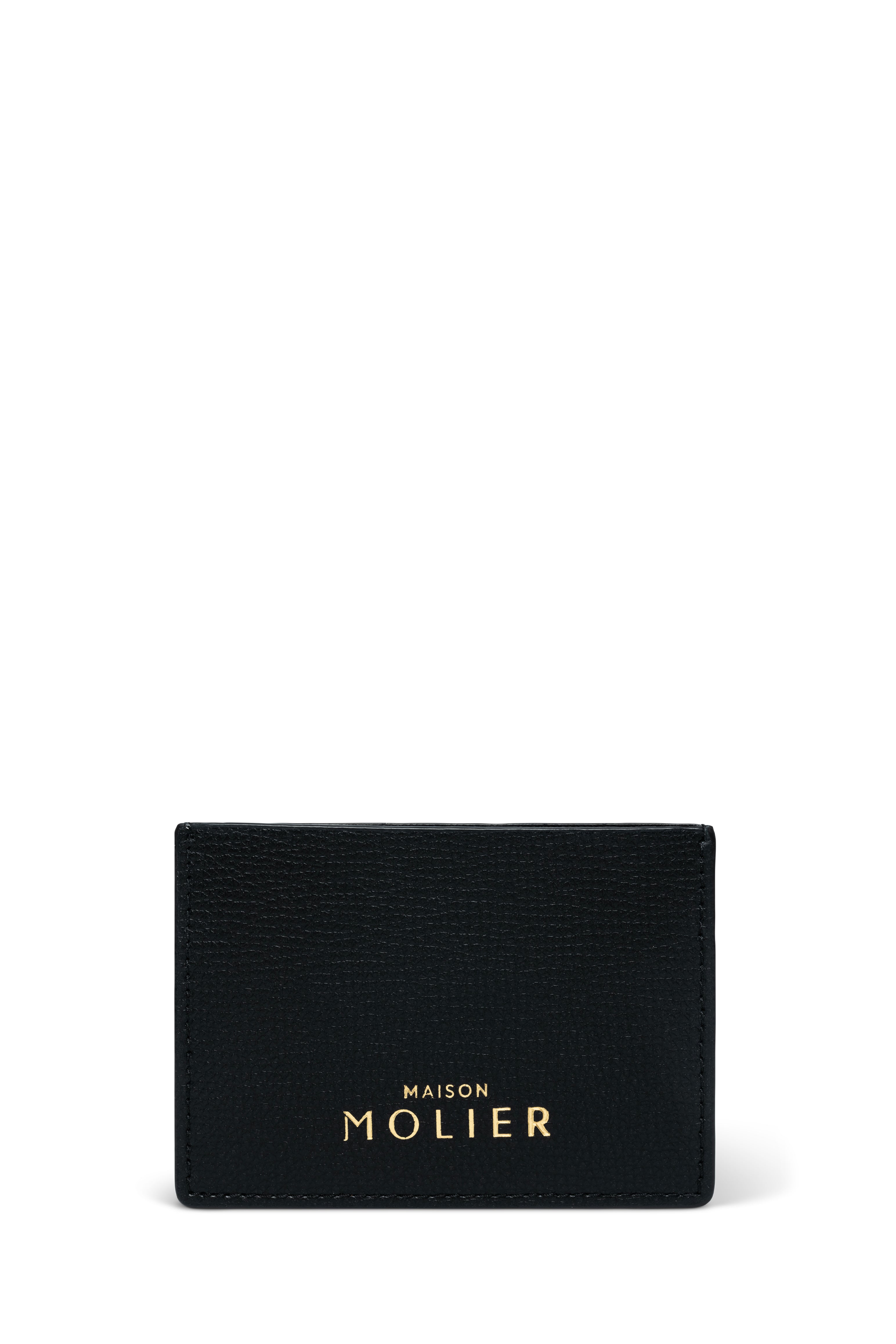
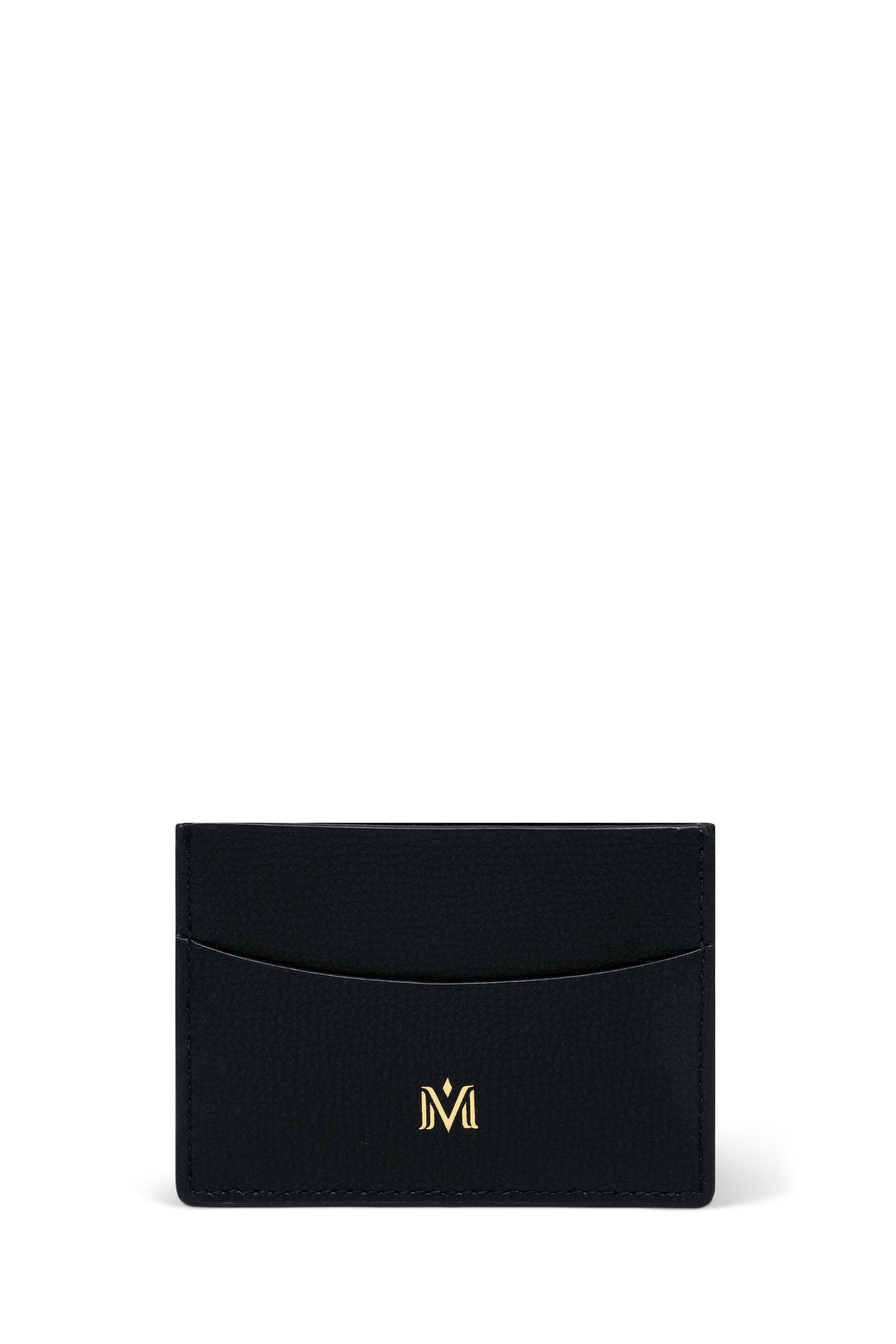
The answer begins with the material. Our leather iPhone cases are made from full-grain Saffiano leather, the dense outer layer of the hide finished with the fine cross-hatch that has signalled durable Italian leather since Mario Prada introduced it in 1913. If you want the long version of why that finish resists the scuffs of daily carry, read more about how and where we make them. The short version: the textured, sealed surface scatters light and contact, so a long day in a pocket reads as character rather than damage.
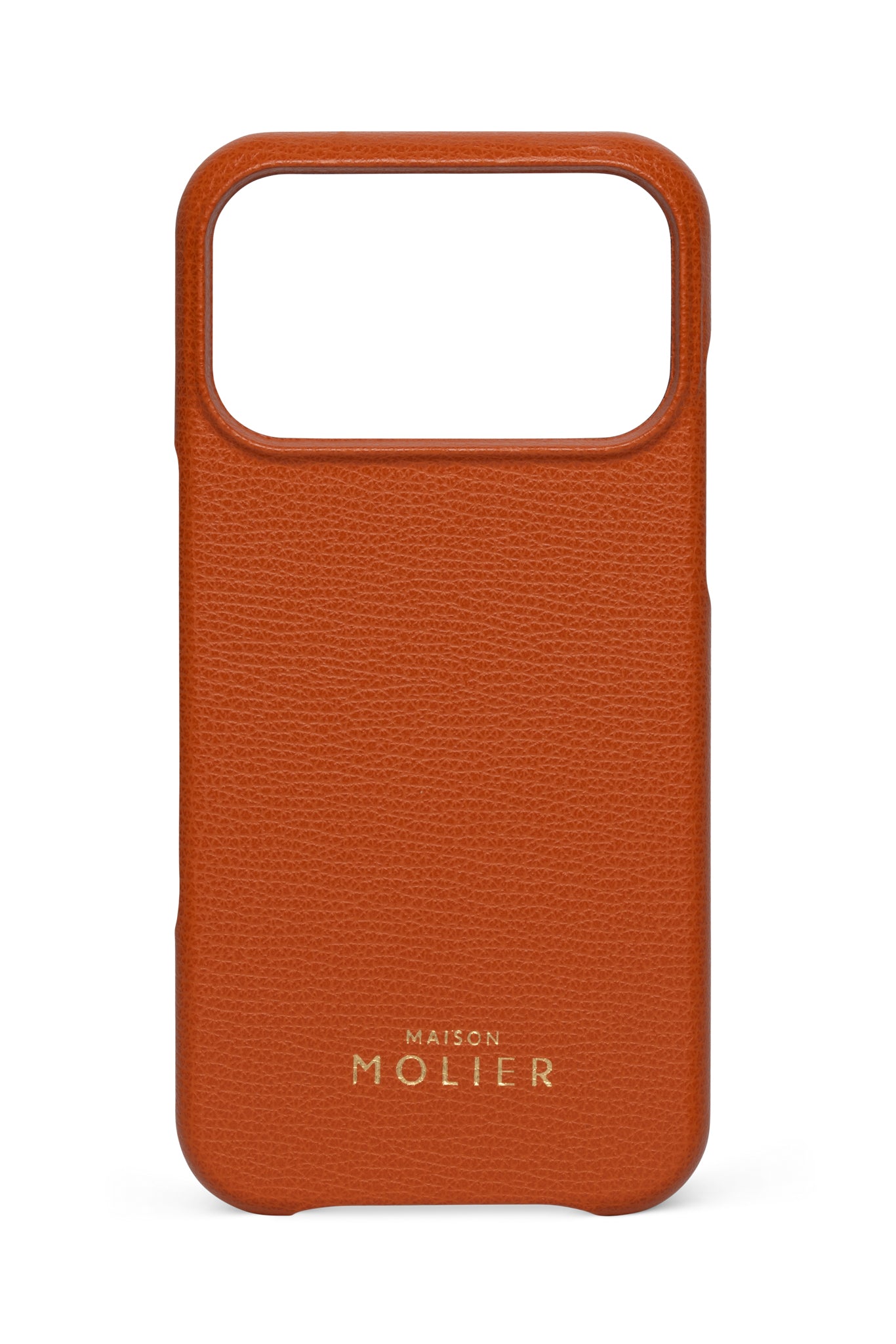
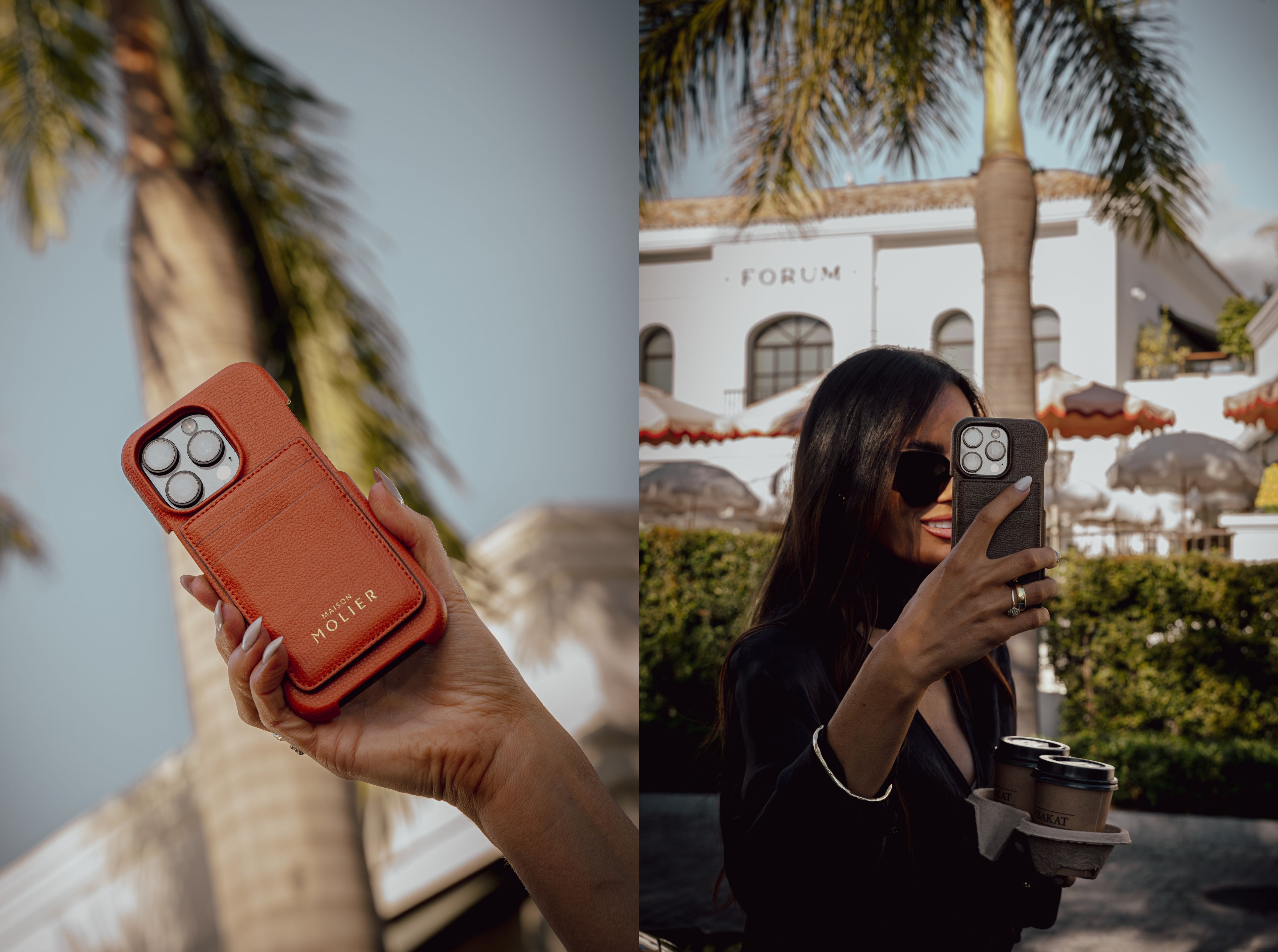
Then comes the part the category skips. Each case is made by hand in our Italian ateliers. Close to five hours of handwork goes into a single piece: the hide cut and skived, the leather wrapped over the inner shell and worked to a clean edge, the camera surround built up so that the lens sits within a raised leather rim, the leather edge itself standing slightly above the glass. The house name is set in gold on the back. Inside, the marks are stamped in the same tone as the leather, so the interior stays quiet by design. Nothing is printed on a surface to be rubbed away; the finish is worked into the piece, including an in-house coating developed in our atelier that we do not share, there to keep the leather looking like itself through years of carry.
Five hours is not a marketing number. It is simply how long it takes when a person, not a press line, decides each piece is finished.
The colour question
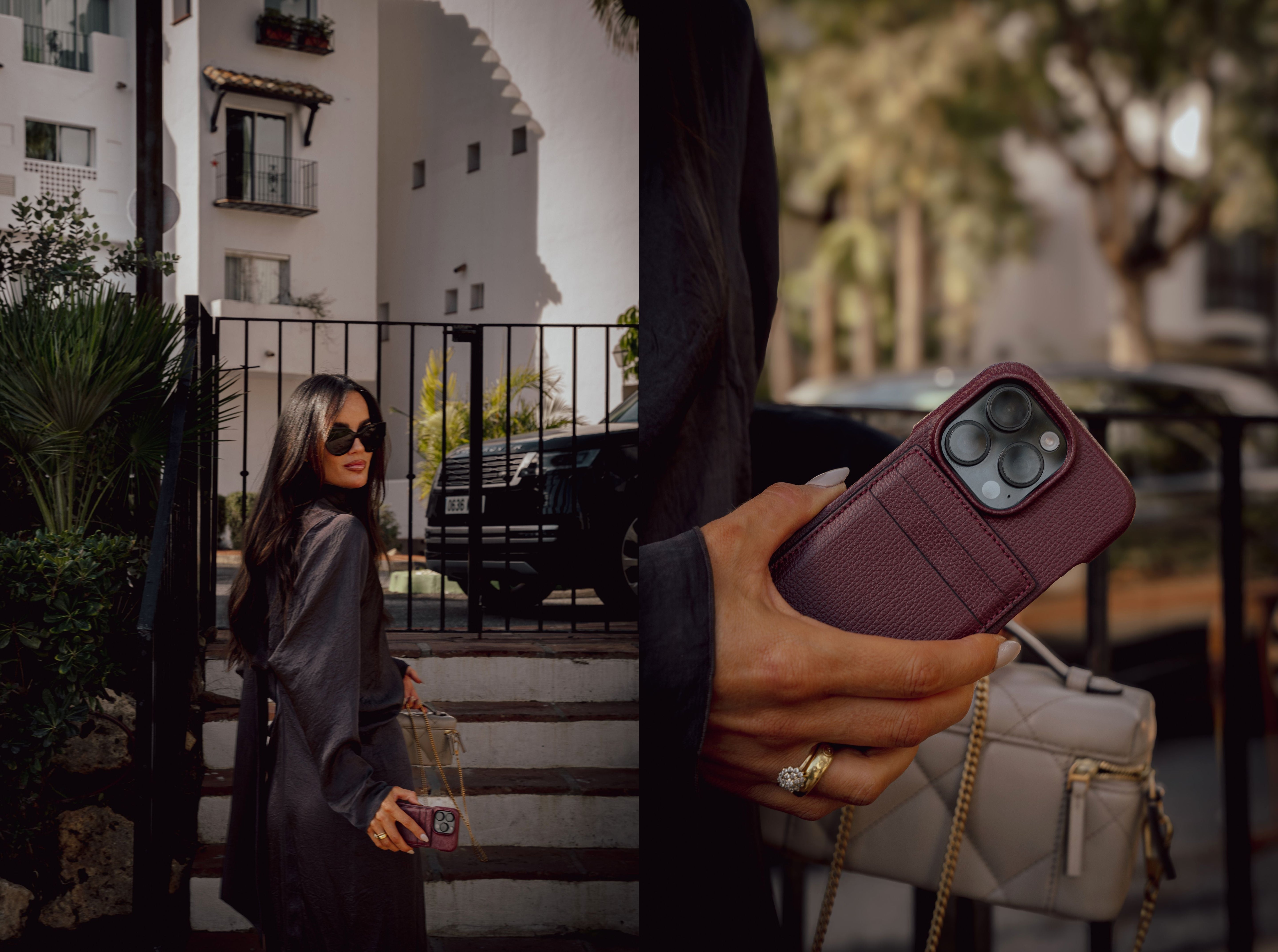
The other failure of the category is chromatic timidity. Brown, black, a navy if the maker is feeling adventurous. We took the opposite view, that a phone is the one object in your day that is always visible, and so it can carry colour with intent. Arancio is a saturated, terracotta-fresh orange, not a muted cognac. Chianti is a deep oxblood burgundy. Moka reads near-black at the edges and warms to chocolate in the light. Latte, Sabbia, Ombra complete a palette built to be lived in rather than to disappear. The point is not loudness. It is that a leather good can be considered in colour the way a coat is, and a phone deserves that consideration more than most things you own.
A patina that is yours alone
There is a reason people mourned the leather case loudly enough that the loss made headlines. A good leather object does something almost nothing else in a phone-shaped life does: it improves. Silicone degrades. Fabric frays. Plastic yellows. Leather, the right leather, made the right way, takes on the record of your days and looks better for it. The patina that arrives is not wear. It is authorship.
The largest company in the world decided that object was not worth making anymore. We think that was the moment to make it properly.
Designed in the Netherlands. Made in Italy. Built to be carried, and made to become yours.
Shop the full range of leather iPhone cases, made by hand in Italy in six colours.
Read more
Saffiano leather is a cross-hatch finish sealed for scratch and water resistance, first pressed by Prada in 1913. How it is made, why it lasts, and how to care for it.
The right iPhone case answers four questions: how much protection you need, which material you want to live with, whether MagSafe matters, and what you carry. A guide to choosing a case that improv...

Leave a comment
All comments are moderated before being published.
This site is protected by hCaptcha and the hCaptcha Privacy Policy and Terms of Service apply.