
How to Protect Your Sunglasses: The Case for a Leather Sleeve
Sunglasses are damaged off the face, not on it. The pair you chose with care spends most of its life in bags, pockets, glove boxes and on café tables, and that is where lenses get scratched, temples get bent and acetate gets warped. Protection is less about one heroic accident and more about a habit: a case worth reaching for, every time the glasses come off. Here is how frames actually get hurt, what separates a good case from a drawer full of forgotten ones, and where a leather sleeve fits.
How sunglasses actually get damaged
Three mechanisms do almost all of the harm, and none of them looks dramatic in the moment.
- Grit and contact. Loose in a bag, lenses share space with keys, coins and zips. Modern lenses carry thin anti-reflective and protective coatings, and it is those coatings that scratch first, leaving glints and haze exactly where you look. Sand is worse: a few grains wiped across a lens act like abrasive paper.
- Pressure. A frame at the bottom of a full tote, or in a back pocket, takes constant load. Temples spread, hinges loosen, and the fit your optician set drifts out of alignment.
- Heat. Acetate, the material of most quality frames, is a thermoplastic. It softens noticeably from around 55 degrees Celsius, which is why a pair left on a parked car's dashboard can come back subtly twisted. The property that makes frames adjustable also makes them vulnerable.
The pattern across all three: damage happens in the minutes and hours when the glasses are set down, tossed in, or left behind. Which is why the honest answer to protecting sunglasses is not a tougher lens. It is a case you will actually use.
Hard case or soft sleeve
The classic advice says hard case, always, and for transit it holds. A rigid clamshell resists crushing, which matters in checked luggage or a rucksack packed tight. It is also why most people own several and carry none: hard cases are bulky, they fight for space in a small bag, and the glasses end up loose because the case stayed home.
A soft sleeve trades maximum crush resistance for the thing that matters more day to day: you take it with you. A structured sleeve keeps grit and contact off the lenses, holds the frame against bending in a normal bag, and slips into the same pocket the glasses would have taken. The choice is not really hard versus soft. It is the protection you carry versus the protection you own.
The fair summary: flying with your glasses in a packed suitcase, use a rigid case. For every day in between, the sleeve that is actually in your bag beats the clamshell in the drawer.
What makes a case worth reaching for
- A soft interior. The lining touches the lenses every time the glasses go in. It should be soft and smooth, and kept free of grit, because sand inside a case scratches as surely as sand in a pocket.
- Structure without bulk. The case should hold its shape under the everyday pressure of a bag, without doubling the space the glasses take.
- A fit that matches the frame. Too tight stresses the temples; too loose lets the glasses move and rub.
- A design you want to be seen with. This is the underrated one. A case gets placed on tables and pulled out in company as often as the glasses themselves. If it looks like an afterthought, it stays home, and so does the protection.
The Maison Molier Sunglass Sleeve
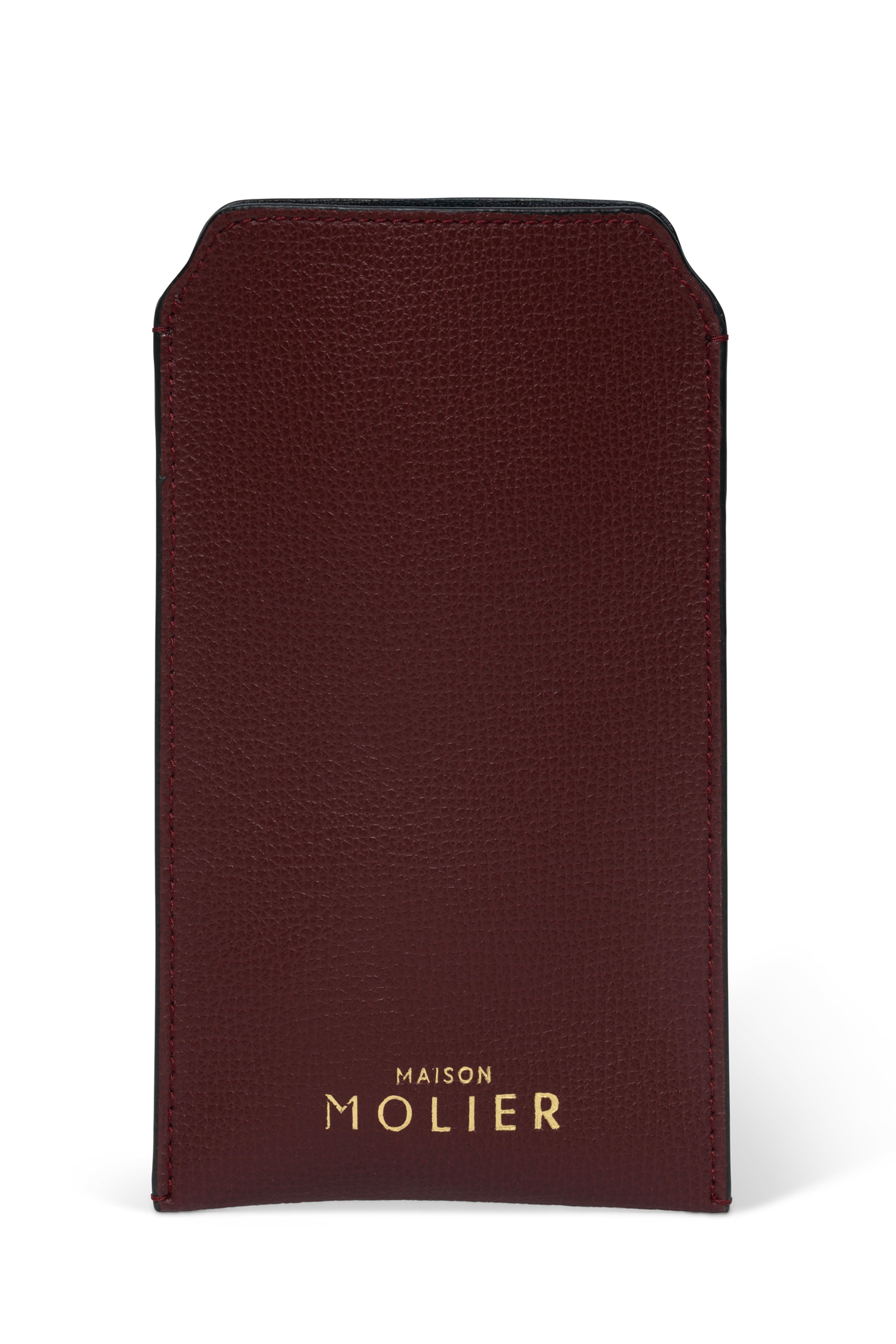
Our Sunglass Sleeve is built on that last insight: the case people carry is the one that earns its place. It is an open-top sleeve in full-grain Saffiano cow leather, made fully in Italy. The silhouette is a clean trapezium with chamfered top corners; the cut narrows toward the opening, so the frame slides in and sits held by the leather rather than rattling loose. There is no flap and no zip to work at one-handed, which is precisely the point: the glasses come off, the glasses go in.
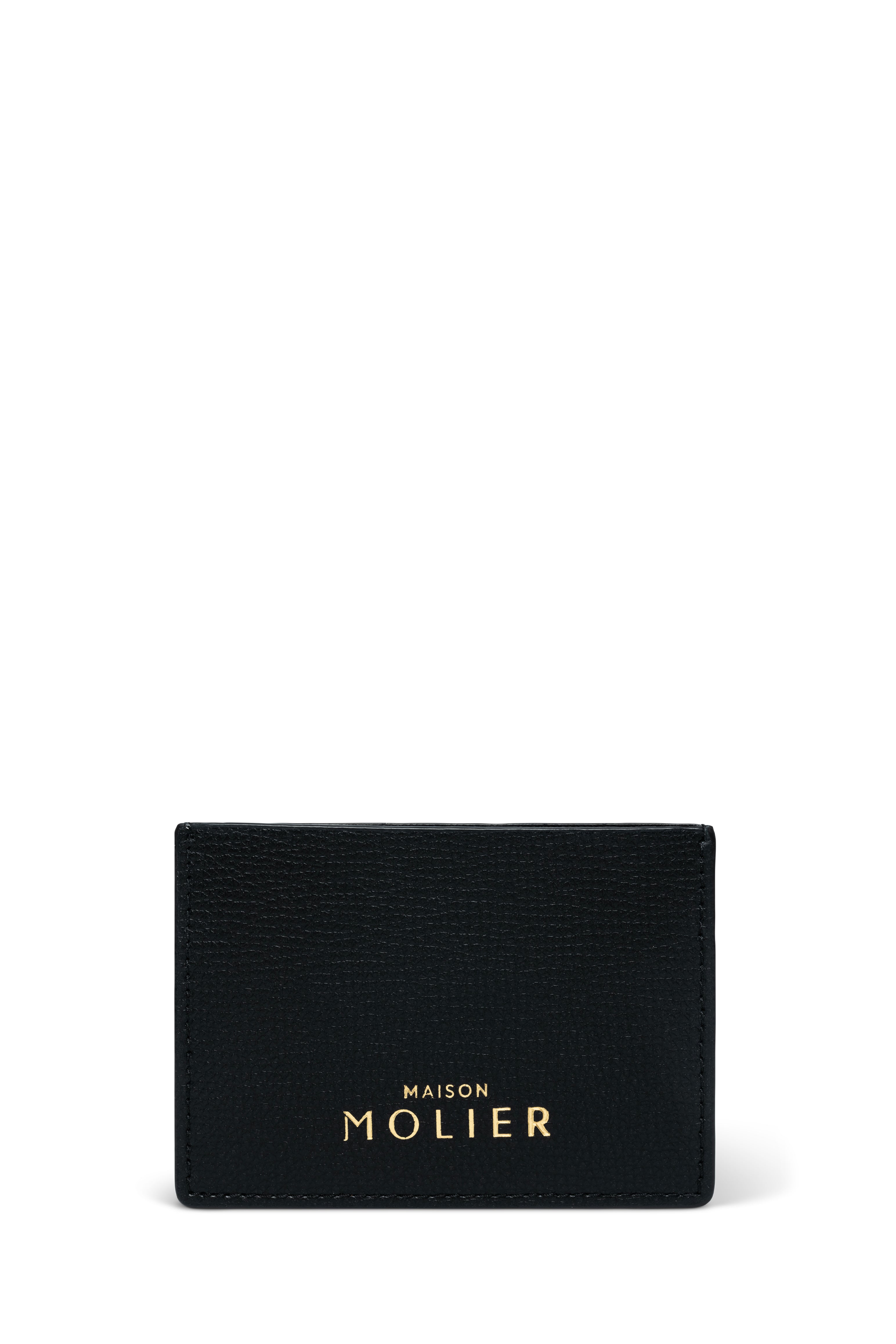
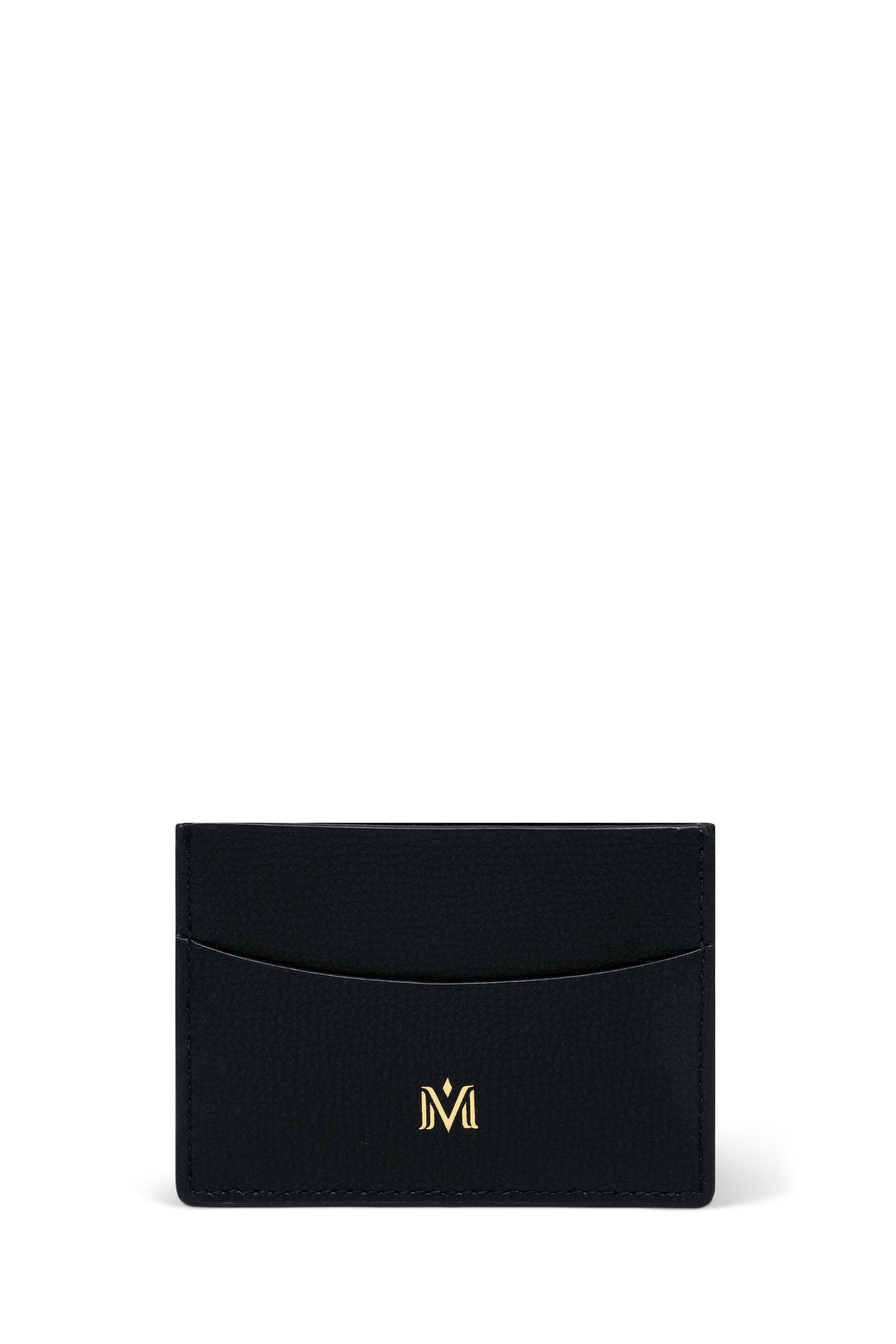
Saffiano is the working choice, not the decorative one. The cross-hatch finish is pressed and sealed, so it resists the scratches and light rain of daily carry, and it holds structure, which is what stands between your frames and the pressure of a bag. The full story of the finish is in our field guide to Saffiano leather. A soft lining sits against the lenses. The front carries the house name in gold; the back, a small MM monogram. It comes in six colours, from Ombra black to Arancio orange, and pairs naturally with the rest of the range in the same leather.
Caring for the frames, and the sleeve
- Clean lenses before they go in. A quick check that no sand or grit rides along keeps the lining kind to the coatings.
- Never leave the sleeve, or the glasses, on a dashboard or a windowsill in summer. Heat warps acetate frames and dries any leather over time.
- Wipe the Saffiano with a soft, slightly damp cloth along the grain. If it gets wet, let it dry at room temperature.
- Give the sleeve its own pocket rather than the bottom of the bag when you can. Structure lasts longer when it is not fighting a laptop.
The case that gives well
A sunglass case sits in a rare gifting sweet spot: everyone with sunglasses needs one, almost no one has a good one, and it carries none of the sizing risk of the glasses themselves. The Sleeve arrives in gift packaging with a branded dust pouch, which settles the wrapping question as well. For a pair of frames someone loves, it is the accessory that says you noticed.
Protecting your sunglasses: quick answers
Is a hard case better than a soft sleeve?
For crush protection in packed luggage, yes. For daily carry, the sleeve you actually bring protects more than the clamshell you leave at home. Many people sensibly keep one of each.
Will a leather sleeve scratch my lenses?
The leather never touches them. The lenses sit against the soft interior lining; keep it free of grit and it treats coatings gently.
Does an open-top sleeve hold the glasses securely?
The trapezium cut narrows toward the opening, so the frame sits in a friction fit rather than loose. Upside down in a normal bag it stays put; for a suitcase handled roughly in transit, use a rigid travel case.
Can I use it for eyeglasses as well?
Yes. Any frame of ordinary sunglass proportions slides in the same way. Oversized and sport frames vary, so check the dimensions on the product page against your pair.
See the six colours of the Sunglass Sleeve, or the full range in the same Saffiano leather, made fully in Italy.

Leave a comment
All comments are moderated before being published.
This site is protected by hCaptcha and the hCaptcha Privacy Policy and Terms of Service apply.