
Which iPhone Case Should You Buy? A Considered Guide
The right iPhone case comes down to four questions: how much protection your days ask of it, which material you want to live with, whether MagSafe matters to you, and what you carry alongside the phone. Answer those honestly and the wall of options collapses into a short list. This guide walks through each question, compares the main types of case, and is candid about where a leather case fits and where it does not.
The stakes are practical. Modern screens run edge to edge, repairs run into hundreds of euros, and most damage comes from a handful of predictable moments: the pocket-height drop onto pavement, the slide off a café table, the bag where the phone shares space with keys. A case is not decoration. It is the difference between a scratch and a repair bill.
Question one: how much protection do you need
Protection in a phone case comes from two things, and neither of them is the material you see. The first is a hard inner shell that absorbs a drop and spreads the force around the body of the phone instead of letting it concentrate on one corner. The second is raised edges: a lip that stands above the screen and a rim that stands above the camera, so the glass never meets the ground directly on a flat landing. We covered the engineering in detail in Do Leather Cases Protect Your Phone?, but the short version is that structure protects, and everything else is surface.
Be honest about your risk profile. If you spend your days at a desk and your phone lives on tables and in coat pockets, a well-built slim case with raised edges covers the realistic scenarios. If you work on a building site, mountain bike at weekends or drop your phone weekly, a thick rugged case with reinforced corners is the correct tool, and no slim case, leather included, should pretend otherwise.
Question two: the material, and what it looks like in a year
Most guides compare materials on grip and shock absorption. That matters, but the more revealing comparison is time. A case is the object you handle a hundred times a day; how it ages is how it lives.
- Silicone and TPU. Excellent grip and shock absorption, gentle on the hand. Over months, silicone collects lint, holds on to dirt and slowly degrades at the corners. It starts at its best and declines.
- Hard plastic. Slim, light, slides cleanly in and out of pockets. On its own it absorbs less impact, and clear versions yellow with sun and skin contact.
- Fabric and woven cases. Warm to the touch, but the surface frays and stains at exactly the points where fingers land.
- Leather over a hard shell. The shell does the protecting; the leather takes the daily friction and turns it into character rather than damage. The right leather is the one material on this list that improves with handling.
Within leather, the base matters more than the label. Full-grain is the outermost, strongest layer of the hide, and a sealed Saffiano finish adds scratch and water resistance on top of it. We wrote a full field guide in What Is Saffiano Leather? if you want the long version.
Question three: MagSafe, decided before you buy
If you use magnetic chargers, car mounts or a snap-on wallet, this question outranks the others. A case without a proper magnet array will drop off a mount at the first speed bump and charge inefficiently, whatever else it does well. Check that the case is described as MagSafe compatible, not merely as thin enough for magnets to reach through. And material is no obstacle here: a correctly built leather case carries the full array, so the magnets work through the leather.
Question four: what do you carry with the phone
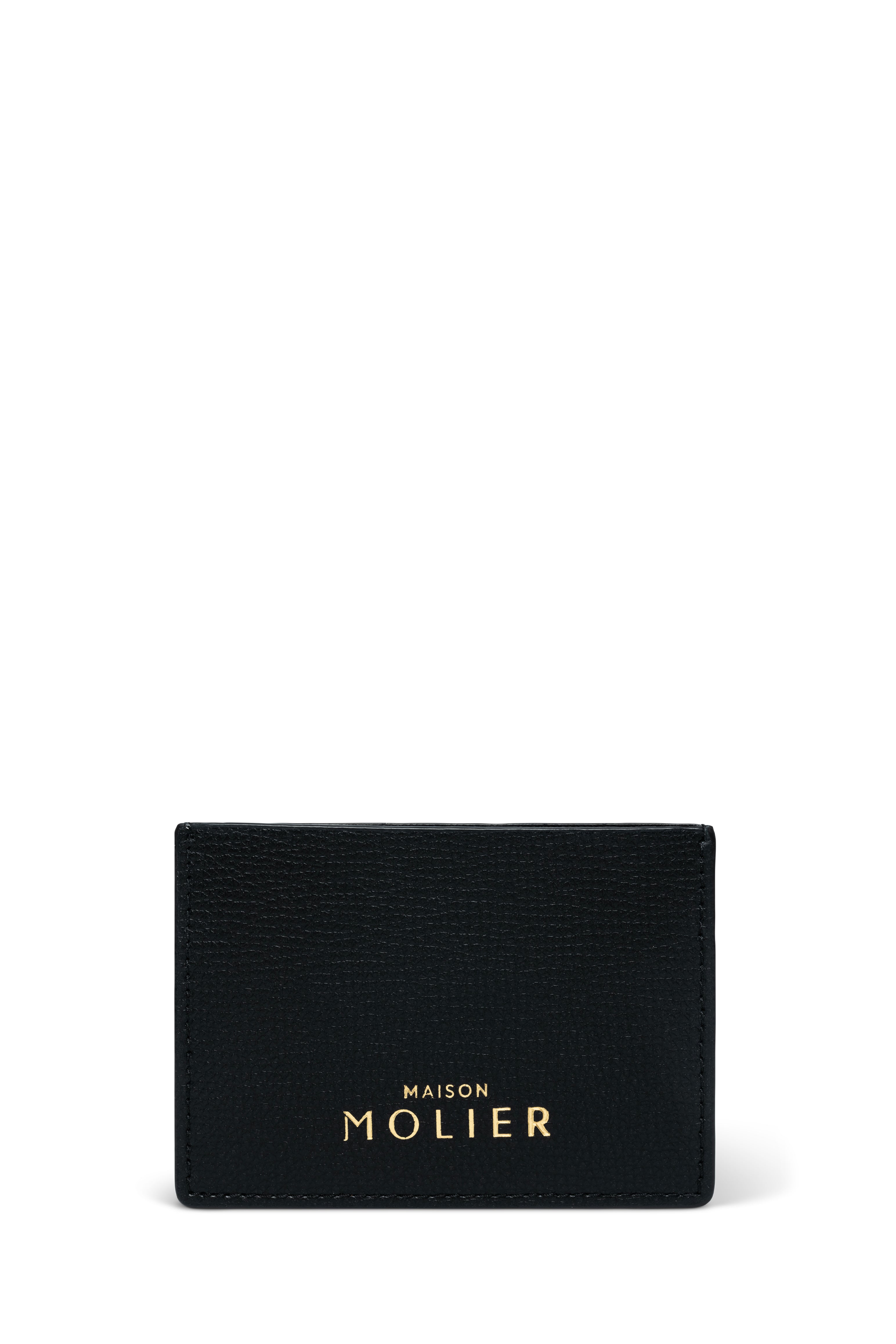
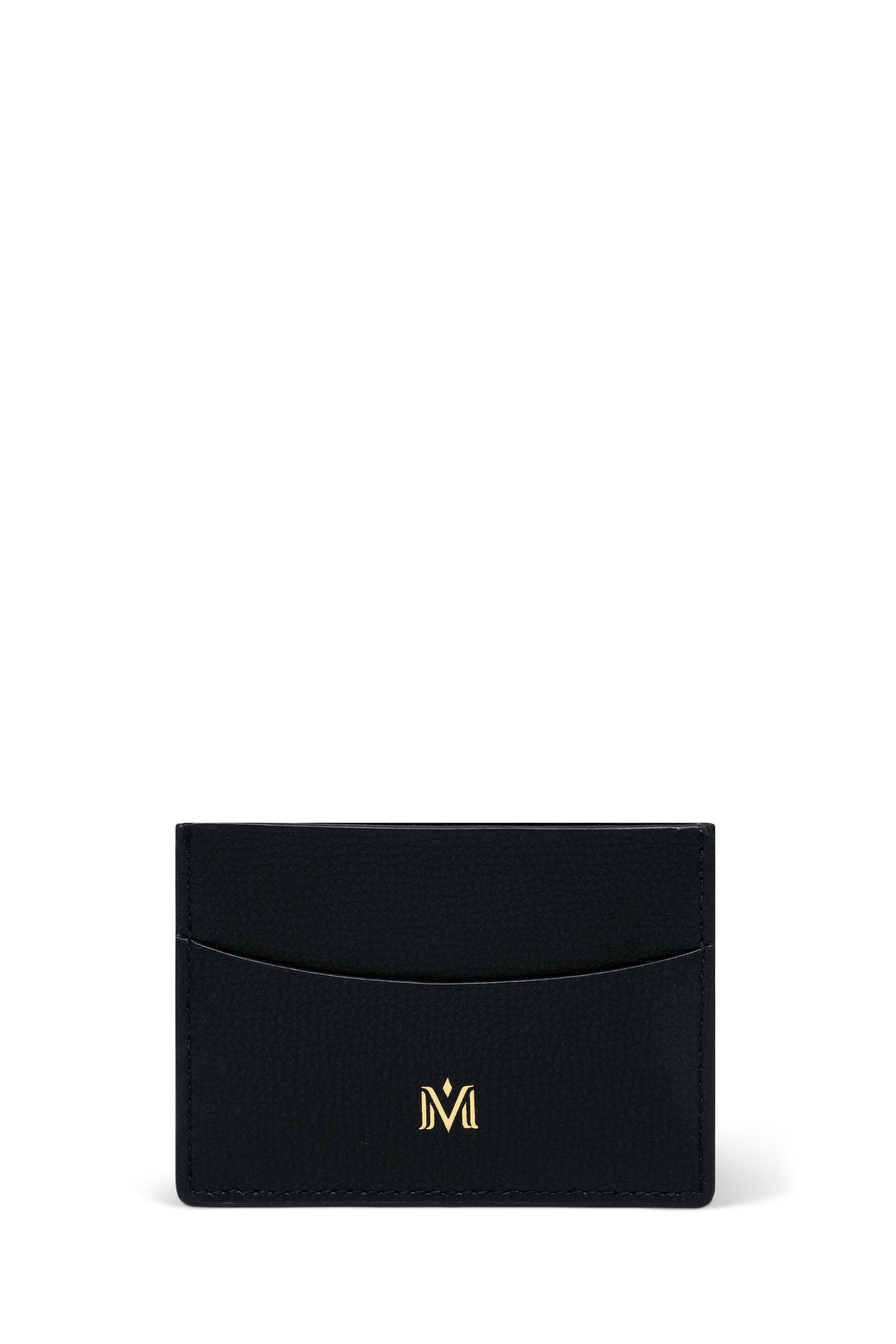
If you want to leave the wallet at home, you have two honest routes. A case with built-in card slots does the job but commits you to the bulk at all times. A magnetic wallet on the back of a MagSafe case is the more flexible answer: two or three cards when you want them, a clean case when you do not. Our MagSafe Wallet holds two cards and snaps onto any MagSafe iPhone or any of our cases; the standalone card holder covers the days the phone stays in another pocket.
The types, in one view
Put the four questions together and the market sorts itself. A thin hard-plastic case suits the cautious desk worker who wants no bulk. Silicone suits the person whose phone slips from the sofa more than it drops on the street. A rugged case suits physical work and serious sport. And a leather case over a hard shell suits the person who wants real everyday protection in an object that reads as a leather good rather than an accessory, and who would rather their case looked better in a year, not worse.
What we chose to build
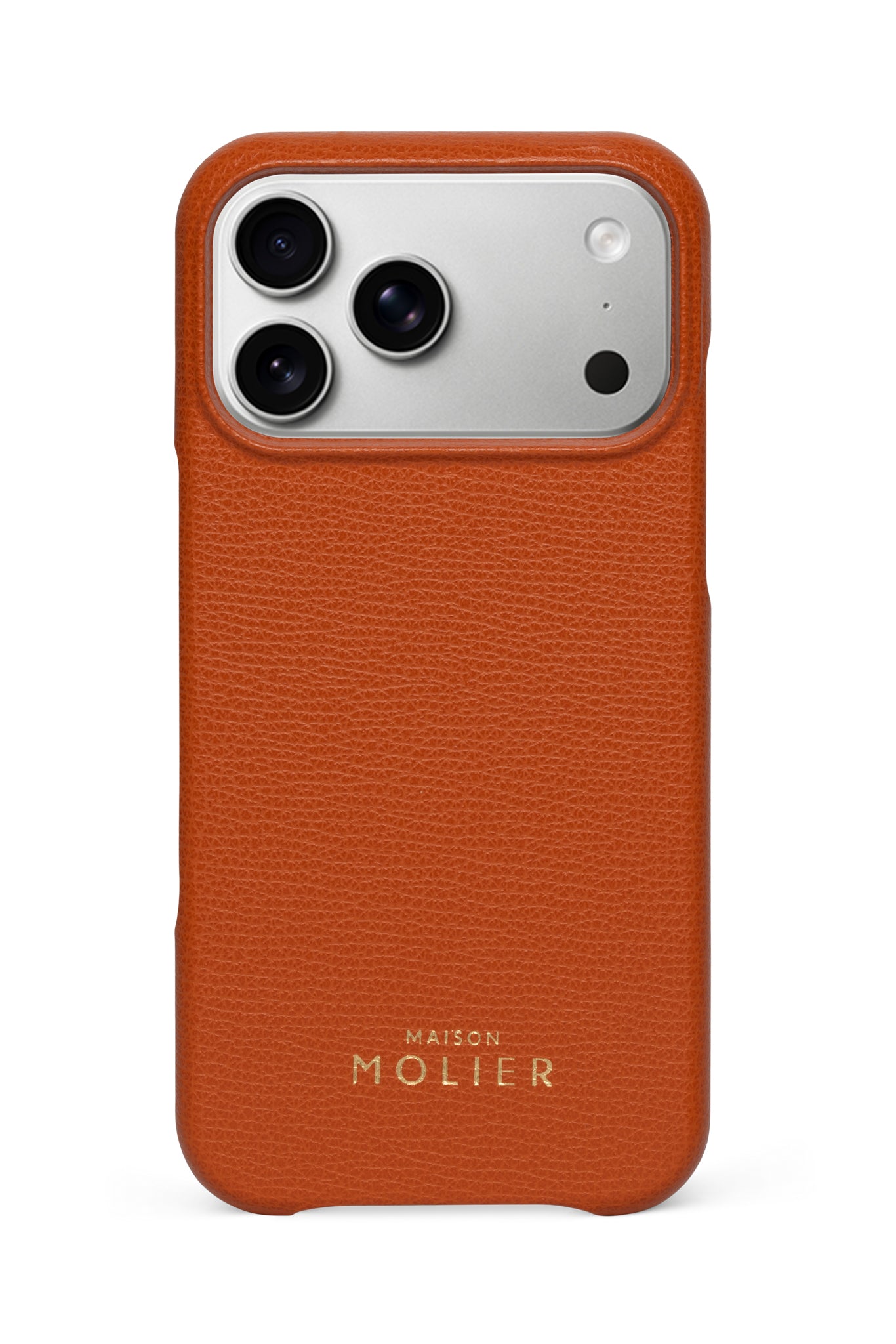
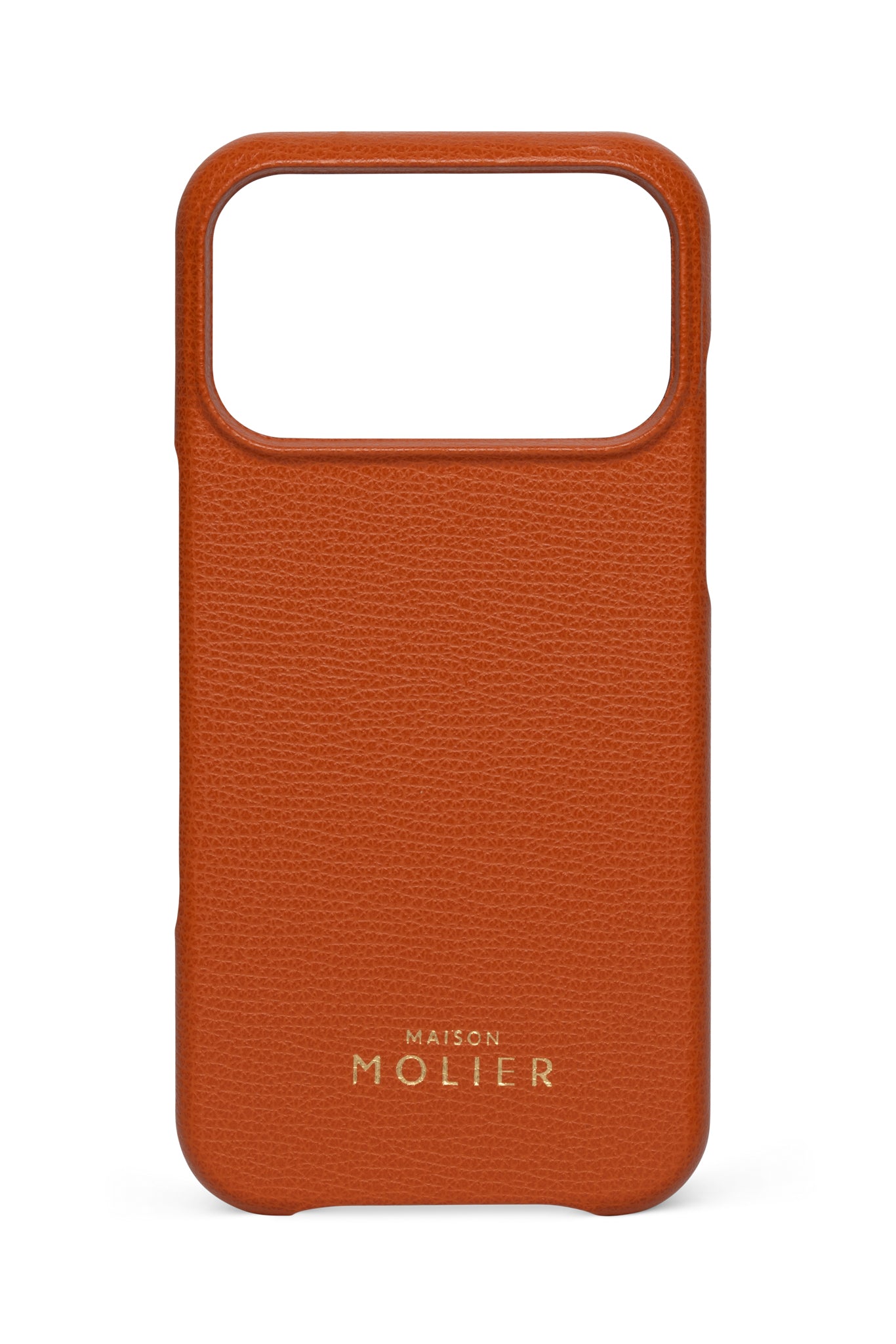
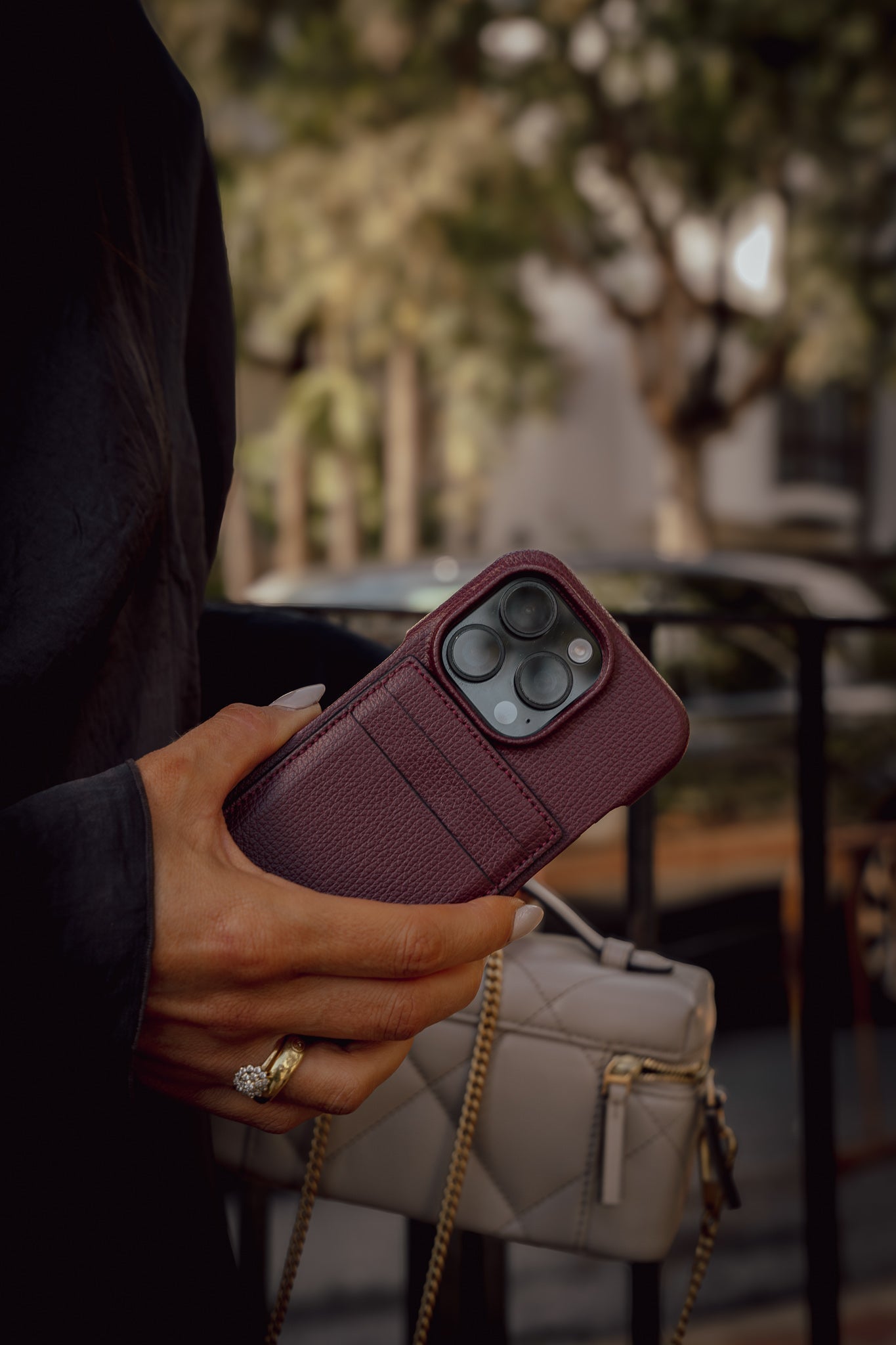
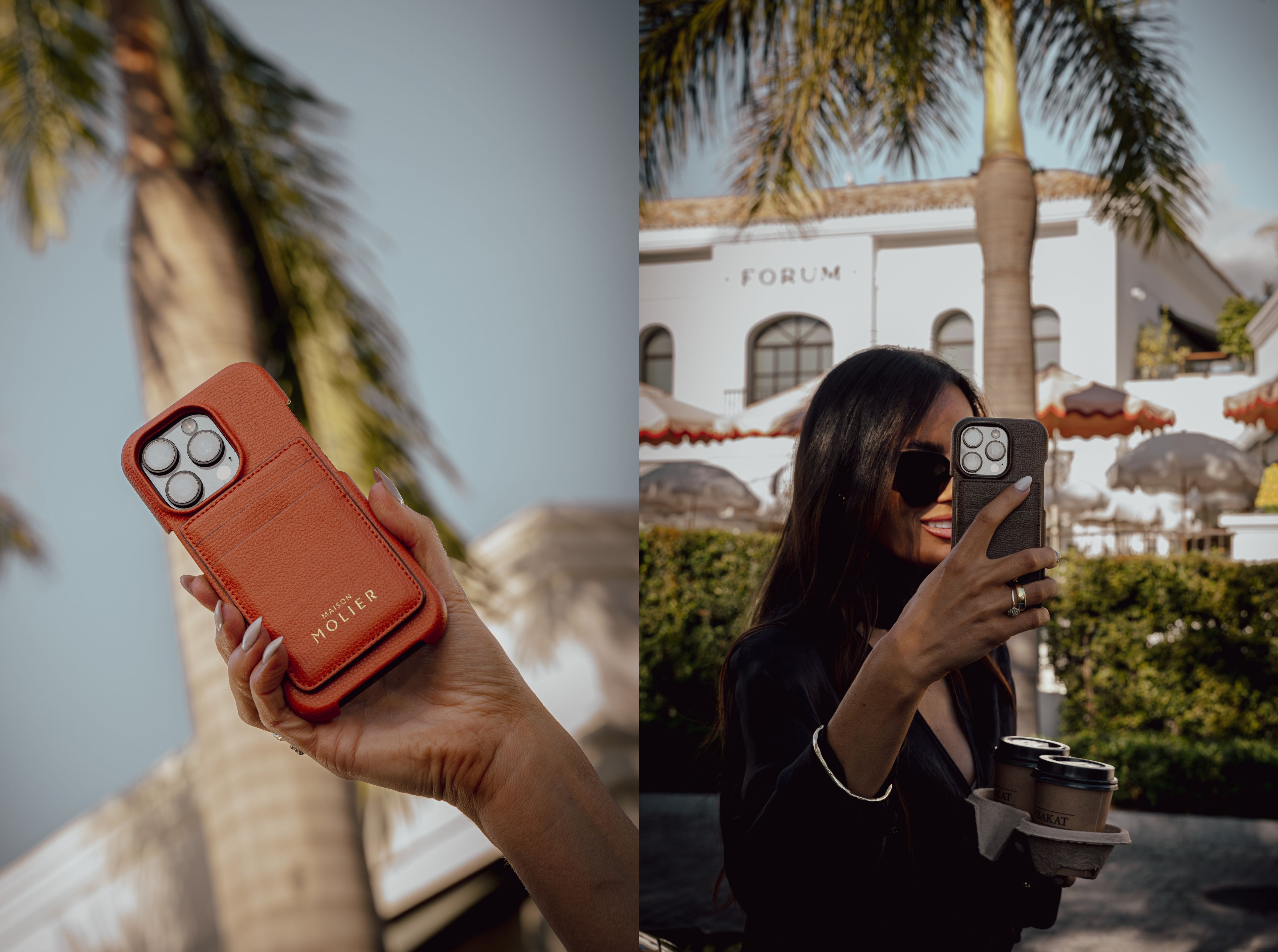
Maison Molier makes one kind of iPhone case, deliberately. A hard polycarbonate inner shell wrapped in full-grain Saffiano cow leather, made fully in Italy. The leather edge is raised on both faces: the front edge stands above the screen, and the camera sits recessed within a raised leather rim, so the leather itself is the protective barrier around the lenses. MagSafe works through the leather. The back carries the house name in gold; the inside is marked tone on tone, quiet by design. It comes in six colours, from Ombra black to Arancio orange, for iPhone 15 Pro through 17 Pro Max. The longer story of why we build it this way is in The Leather iPhone Case, Reconsidered.
Which iPhone case should you buy? Quick answers
Is a leather case better than silicone?
Different, honestly. Silicone absorbs shock well and grips well, but degrades with use. A leather case with a hard inner shell protects comparably in everyday drops and ages into character instead of wear. If you keep a phone for years, leather rewards the time.
Do slim cases protect at all?
A slim case with a rigid shell and raised edges handles the common drops: pocket height, table height, face-down landings. What it does not do is absorb a two-metre fall onto concrete corner-first. Match the case to your actual days.
Do I need a MagSafe case?
If you own a magnetic charger, mount or wallet, or expect to, yes. iPhone 12 and later support it, and a case without the magnet array takes the feature away.
Which case fits the iPhone 17?
Every Maison Molier case is cut per model, with versions for iPhone 15 Pro, 15 Pro Max, 16, 16 Plus, 16 Pro, 16 Pro Max, 17, 17 Air, 17 Pro and 17 Pro Max. Select the model on the product page and the fit, buttons and camera rim are exact.
See the six colours across our leather iPhone cases, or the wider range, made fully in Italy.
Read more
Apple left leather behind in 2023. A look at what the leather iPhone case became, who fills the gap, and why a handmade Saffiano case from Italy answers what the category forgot.
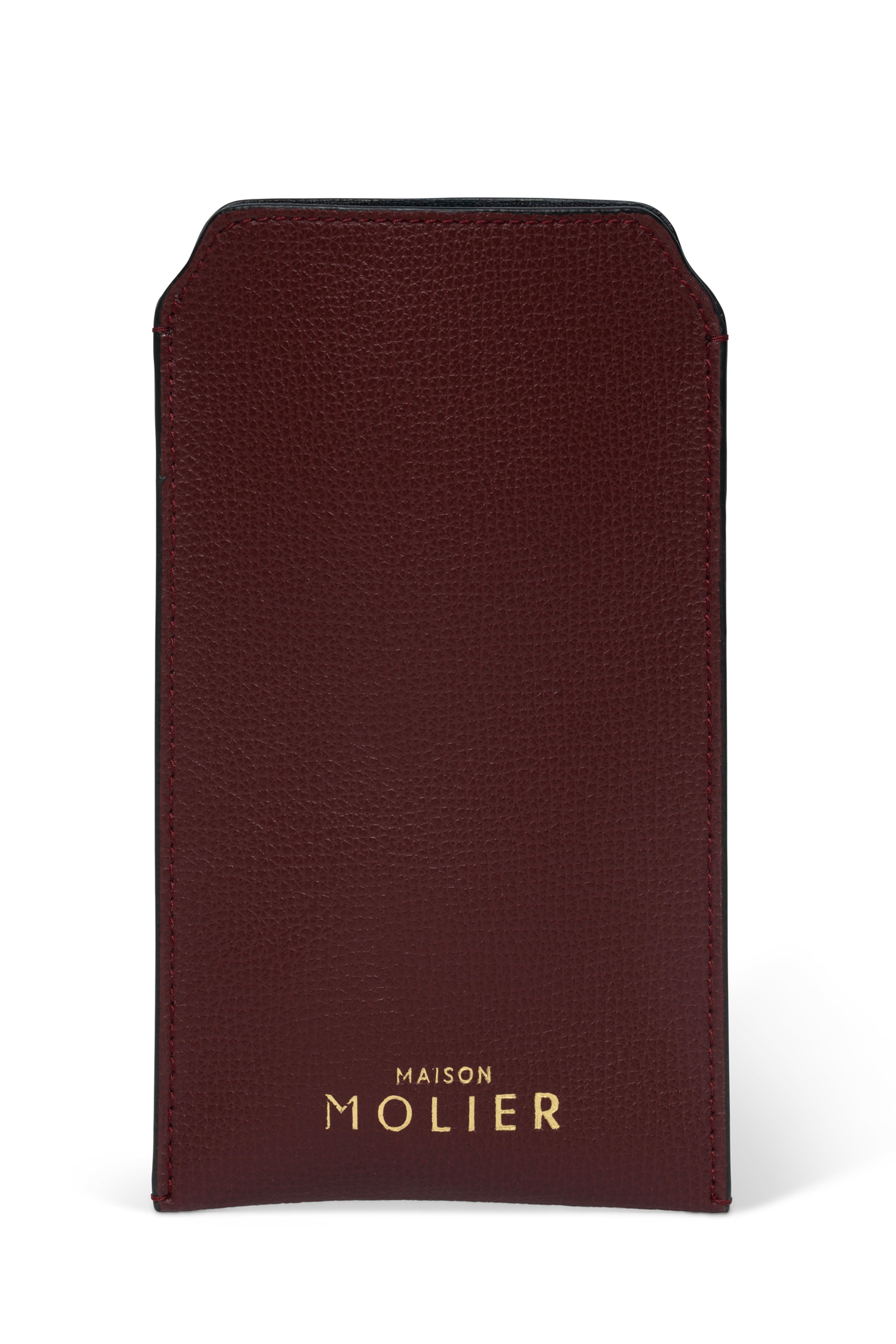
Sunglasses are damaged off the face, not on it. How frames and lens coatings get hurt, hard case versus soft sleeve, and how a Saffiano leather sleeve protects the pair you chose with care.

Leave a comment
All comments are moderated before being published.
This site is protected by hCaptcha and the hCaptcha Privacy Policy and Terms of Service apply.